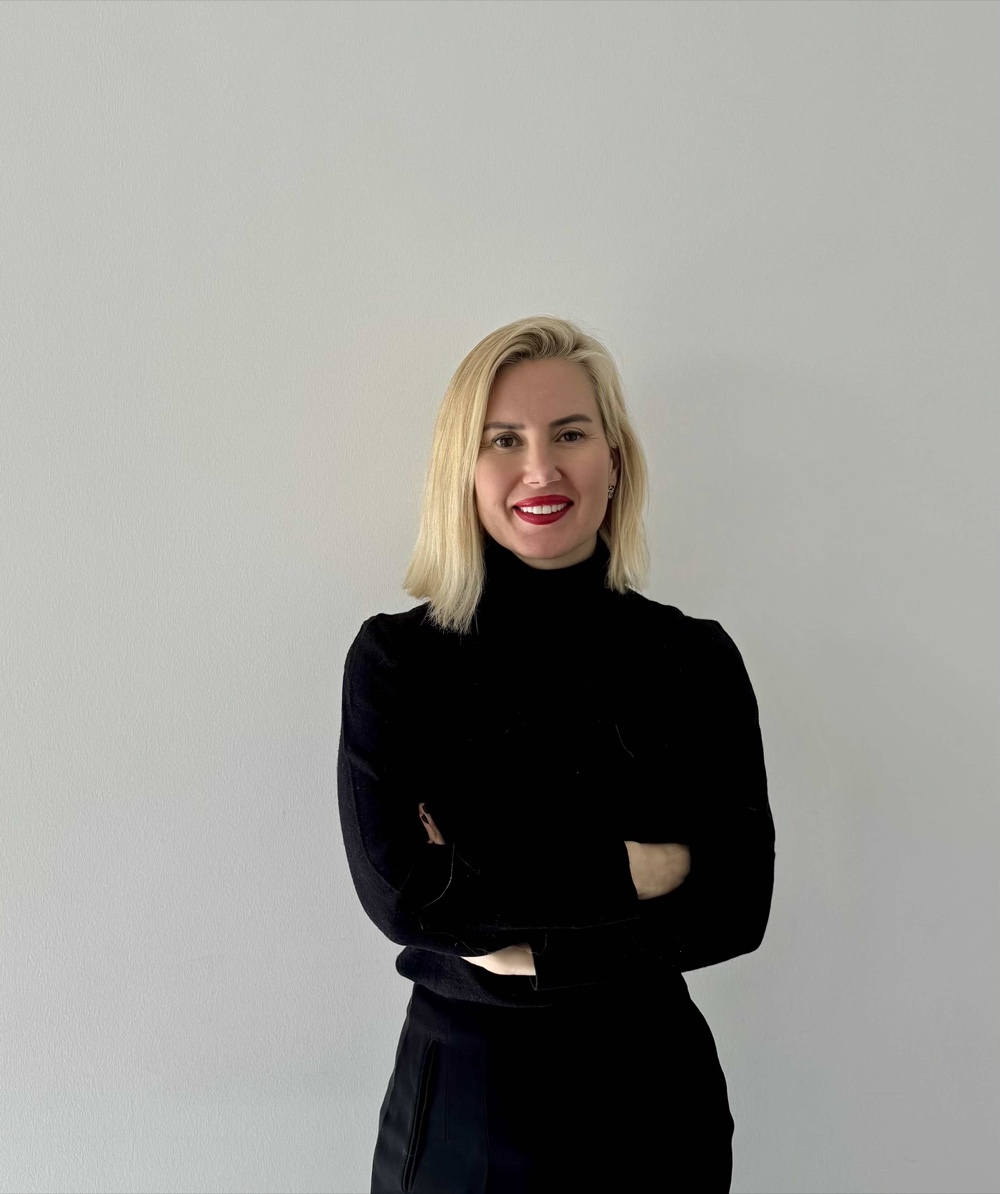
One morning, sipping my coffee at our agency office in Akaretler, I caught myself asking:
"Am I ready for this?"
It was 2022. The pandemic had just ended, but the world was changing fast. Through those long months at home I spent almost every day exploring how blockchain, AI and new technology could reshape marketing and advertising. The same feeling kept returning: something new is coming.
We stepped out of our comfort zone, into a future where everything was being rewritten. That is how Adin.AI was born inside YW. I will admit it was far harder to do than to say — one day we will tell the full behind-the-scenes story.
What about you? Have you ever thought about stepping out of your comfort zone?
When we first started publishing AI for Marketing, the goal was simple: to make the AI conversation in marketing clearer, more honest and more applicable. Because AI is no longer just a topic for tech teams. It sits right at the centre of marketing.
In this issue
- Where is marketing headed in 2026?
- What are AI agents really changing?
- How agents create value in creative strategy, consumer research and idea generation
- Why our own Creative Intelligence System matters
- Bonus: the story behind the Cannes Lions AI Award Calculator
- Quick Takes: a few things that caught my attention
Coffee ready? Let's begin.
Where is marketing headed?
If you have noticed, AI's first big contribution was efficiency. Less operational load. Faster production. Shorter reporting cycles. More variations. Faster testing.
But by 2026 it is no longer just about efficiency. AI is slowly becoming marketing's operating system.
McKinsey's 2025 State of AI research points the same way. Companies are no longer just experimenting — agentic AI and gen AI are spreading across more business functions. But for many, the hard part is still the same: moving it from pilot to real business outcomes.
It is much the same on the marketing side. In the first phase everyone used AI to produce content, write copy, generate images and build decks. That was a good start — but not enough. The real difference will show up in teams that put AI inside their daily workflow: not using tools one by one, but making the whole process smarter, from research to strategy, from idea to media planning, from reporting to optimisation.
The new marketing skill set
AI and data skills are becoming essential for every marketer. Marketing is turning into a far more analytical discipline — and honestly, it was about time.
Marketing used to run mostly on intuition, creativity and brand feel. Those still matter — even more in the AI era. But they are no longer enough. The strong marketer of this era will not just be the person who thinks up good campaigns. It will be the person who can read data, use AI tools, build systems, connect to outcomes, and get different teams working around one goal.
That is why I do not think marketing can be run as a single department anymore. It has to be run like an ecosystem — data, creative, media, technology, sales and growth at the same table, with AI as the shared language.
Where are we in AI adoption?
2024 and 2025 were mostly years of experimentation. Everyone tried something with ChatGPT, Gemini, Claude, Midjourney, Runway, Kling and the rest.
In 2026 the question has changed. It is no longer "are we using AI?" The real question is: "where in our workflow is AI creating real value?"
Per eMarketer's early-2026 data, many marketers are still at a mid-level of AI maturity. AI is tried most in creative tasks like ad-copy generation, but there is still a lot of room in the planning, operations and decision processes behind the scenes.
That feels very familiar to me. Because the hard part of marketing is not only producing content. It is understanding the right consumer. Finding the right insight. Choosing the right idea. Putting the right budget on the right channel. Reading the result correctly. And then deciding again, fast. That is where AI's real impact will begin.
Day 1 action plan
A few simple steps to start today:
- Start using Claude Pro. Bring your team in too. Treat it as an investment in yourself.
- Run short 20-minute AI learning sessions every week.
- Think of marketing as an ecosystem, not a department. Talk to AI startups, bring them into your system, and grow together.
- Build AI projects that actually work. Measure the results and tell the world.
- Be the example, not just the adopter. Believe me, it is much easier now.
Trend: what exactly is an AI agent?
AI agents are not coming to replace us — they are coming to work alongside us.
You have probably noticed the term "AI agent" everywhere lately. But what does it actually mean? How is it different from a simple chatbot? And more importantly: why should marketers care?
What is an AI agent?
An AI agent is not just a system that gives answers. It is a structure that moves toward a goal step by step — making decisions, taking action and managing the process.
Simply put: a chatbot answers you. An agent tries to complete a job. It researches. Compares. Plans. Proposes actions. In some cases takes action. And evaluates the result again.
Gartner's 2026 marketing predictions also put agentic AI front and centre — routine customer interactions, personalised guidance and smarter marketing journeys are being reshaped by agents. So I think it is wrong to see agents as just "smarter chatbots." Agents are a new way of working, and marketing is one of the areas that will be most affected.
Where do AI agents stand in the big picture?
I would read the journey like this:
- Rule-based automation — 2010 to 2020
- Generative AI — 2021 to 2023
- Task-oriented AI agents — 2024 to 2026
- Multi-agent workflows — 2026 to 2028
- More autonomous, learning marketing systems — beyond 2028
Right now we are moving from the third stage to the fourth — from a single AI tool to systems of agents working together. That is a major turning point.
Because marketing is not a one-step job. A brief comes in. Research is done. Insight is drawn. Strategy is built. An idea is developed. A media plan is made. The campaign goes live. Results are read. New decisions are made. Agents can take a role at every link of that chain. But the human has to stay at the centre — because good marketing is not only about giving the right answer. It is about asking the right question.
Real-world examples
If you want to start using AI agents today, look at these areas:
- Customer engagement
- Customer-service automation
- Creative strategy
- Consumer research
- Media planning and optimisation
- Reporting and insight generation
- Budget allocation
What these have in common: AI is no longer just a system that gives ideas. It is becoming a structure that does the work, speeds up the process and produces a result.
Adin.AI's work in media planning and optimisation shows this very clearly. Marketing teams no longer just want a dashboard. They want systems that explain what happened, why it happened, and what to do next. I think that is the start of a new era in marketing software.
Creative strategy is stronger with agents now
The impact of AI agents in marketing is not limited to reporting, media planning or operational work. For me, one of the most exciting parts begins in creative strategy, consumer research and idea development.
Because a good creative idea usually comes from three things: good research, a strong insight, and the right creative leap. That process used to rely on experience, intuition and long team sessions. Those still matter — but AI agents can now make the process far faster, broader and more systematic.
BCG's work on GenAI and marketing supports this. BCG argues AI does not just speed up content production in marketing — it forces a rethink of the marketing operating model. The point is not only faster output; it is better planning, better activation and better optimisation. In another BCG analysis on creative production, GenAI lowers content-production cost, lets teams test ideas faster, and makes personalised creative more feasible.
There is an interesting shift on the consumer-research side too. Synthetic users, digital twins and AI-assisted research models are being used more in idea development. But we have to be careful here. The Nielsen Norman Group's 2025 assessment matters: AI-simulated users can help test some hypotheses, spot gaps, and predict some population-level tendencies — but they do not replace real user research. Context and data quality are crucial for good results.
I strongly agree. The point is not "let AI find the idea for us." The point is: let AI show us more angles, surface more consumer tensions, open more strategic paths and more idea space — and let the human make the final call.
At YW, our own Creative Intelligence System does exactly this. Every brief does not land on one creative's desk. First it moves through agents:
- a consumer-research agent gathers consumer signals
- a strategy agent draws insight from those signals
- a creative agent widens the idea space
- a performance agent looks at the idea's media and growth potential
- a presentation agent shapes the output into clarity the brand can grasp
Then the human team steps in. So AI does not produce the idea for us — it opens better thinking space. That, for me, is where this era's creative power lives: not just in producing faster, but in asking better, thinking wider, and reaching the right insight earlier.
So I genuinely recommend trying the Creative Intelligence System. Send us your brief, and we will show you how our AI-native creative strategy process works.
Cannes Lions AI Award Calculator
We are not developers. But we have a lot of ideas we want to bring to life. One of them was an app that predicts the odds of winning prestigious awards.
Using Manus.ai, we built the Cannes Lions AI Award Calculator. The system analyses the festival's 70-plus-year history and estimates win probability across categories, countries and entry patterns.
Then the Cannes Lions Global Festival Director reached out. They loved the project — but asked us to remove the logos and links to avoid confusion with the official brand. Of course we understood; we actually saw it as a very gracious note. Who knows, maybe one day we will even see an AI jury member.
We cannot share the live site right now, but we can share a few fun insights:
- Average win probability is usually very low.
- Big network agencies, big budgets and strong case storytelling can raise the odds significantly.
- Categories like Creative Commerce draw more interest.
- Brazil has been one of the strongest countries in creative awards in recent years.
- Türkiye has special, valuable work in Cannes Lions history — but I think we still have far more potential at the global level.
When we tried the system ourselves, even where the odds looked low, creative quality and cultural impact could flip all the numbers. That is exactly what makes creativity beautiful. Not everything can be measured — but you can ask better, analyse better and prepare better. In the end this was a passion project for us; it also helped us understand our engineering team better and opened a new perspective.
Quick Takes
A few things that caught my attention:
AI is moving into marketing's back office
In the first wave everyone focused on producing content with AI. That is natural. But I think the bigger change will happen behind the scenes — planning, budget allocation, reporting, segmentation, insight generation and optimisation. As eMarketer noted in early 2026, AI is starting to take more space not just at the front of marketing but in the back-office processes too.
That matters, because inefficiency in marketing usually does not come from a lack of good ideas — it comes from scattered systems. Too many channels. Too many reports. Too many meetings. Too much manual checking. If AI can reduce that mess, the marketer's real job gets clearer: think, choose, give direction, and make brave decisions.
Kling.AI and video
Kling.AI is one of my favourite AI video tools. In 2025 it made a big leap in video generation and editing with Kling 2.0, and in 2026 the 3.0 series keeps showing how fast this space is moving.
I think we are entering a very interesting period for ad production. The distance between an idea and a first cut is shrinking fast. That does not reduce the value of good creative directors — quite the opposite. As tools multiply, taste, selection and a sense of direction matter more. Everyone can produce video. Not everyone can produce a good idea.
Ryan Reynolds and Wrexham AFC
The Wrexham story from Ryan Reynolds and Rob McElhenney is still a great marketing lesson. In 2025 the club won a third straight promotion, into the Championship — Reuters and The Guardian called it one of the most remarkable rise stories in English football.
It is not just a football success. It is a very well-told story: underdog spirit, local culture, emotion, ownership, and a very smart media mind. However much marketing changes, storytelling will keep its importance — because we still do not decide with logic alone. We decide with emotion. Ryan knows that well, and he does not just run the Wrexham story, he tells it.
Mixed reality, AI video and new creative space
Lately, mixed-reality work, AI video experiments and real-time creative production all make me think the same thing: technology alone is not enough — but combined with a good idea, its impact is huge. A new playing field is opening for brands. Ideas will be tested faster. Creative will multiply faster. Media will optimise faster. But the need for good strategy will grow, not shrink — because as speed rises, a sense of direction matters more.
Closing
That is it for this issue. AI keeps changing marketing. But I think the real point is not how powerful AI is — it is how well we learn to work with it. Research better. Think better. Develop better ideas. Test faster. Decide more clearly. That will be the new marketing reflex.
If this was useful, share it with your team or your circle. If you would like to try the Creative Intelligence System, send your brief to YW. And if you want to follow how AI is changing marketing, we will keep the conversation going here.
See you soon. Stay sharp, stay well.